
Choosing the right SaaS (Software as a Service) tools can make or break your startup’s early success. With thousands of platforms available, from email marketing to project management, founders often feel overwhelmed when deciding where to invest limited resources.
This article contains affiliate links. If you purchase through these links, I may earn a commission at no additional cost to you.
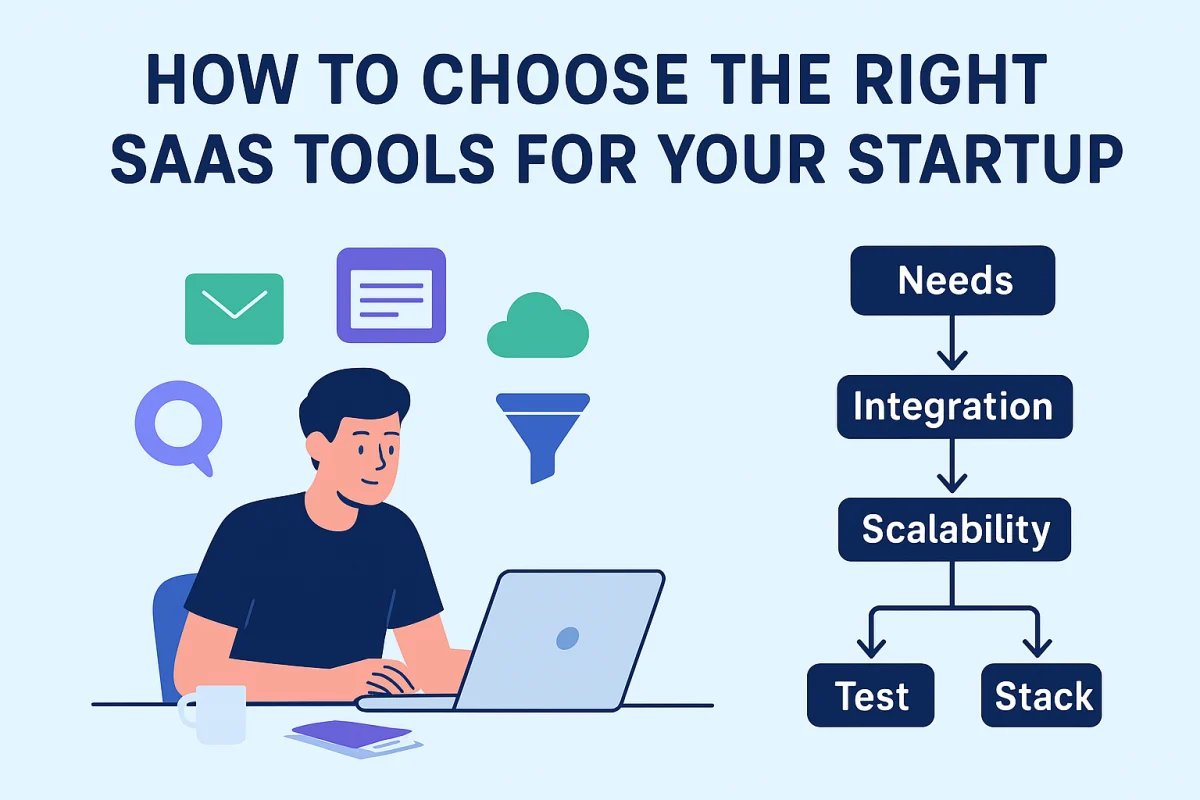
To simplify the process, here’s a step-by-step decision framework that will help you identify, evaluate, and implement the best SaaS tools for your business needs.
Step 1: Define Your Core Business Needs
Every startup is different, but most will need solutions for:
- Email Marketing & Automation – to nurture leads and keep your audience engaged.
- Website & Landing Pages – to establish an online presence quickly.
- Project & Workflow Management – to stay organized and efficient.
- Creative & Technical Services – for design, branding, and development needs.
For example, if you need a powerful all-in-one business platform, Systeme.io offers landing pages, funnels, and email marketing under one roof—ideal for bootstrapped founders.
Step 2: Prioritize Simplicity and Integration
Choose tools that work well together and minimize your learning curve. Complex, siloed systems waste time.
A simple and intuitive website builder like SITE123 lets you get your site live without hiring a developer—perfect for early-stage businesses.
Step 3: Consider Scalability
Select platforms that can grow with your business. A tool that works for 100 customers should also scale to thousands without forcing you into expensive migrations.
For growing your subscriber list and sending automated campaigns, AWeber is a reliable choice that adapts as your audience grows.
Step 4: Balance Budget and ROI
Startups need to keep costs lean, but don’t just go for the cheapest option. Instead, think in terms of return on investment: does this tool save time, generate revenue, or improve productivity enough to justify its cost?
If budget is tight, you can outsource specific projects instead of buying long-term software. 👉 Platforms like Fiverr give you access to talented freelancers for design, marketing, coding, and more—without locking you into monthly fees.
Step 5: Test Before You Commit
Always start with a free trial or freemium version before committing. This lets you evaluate whether the tool fits your workflow and integrates with your existing stack.
Step 6: Build a Lean Tech Stack
Resist the temptation to sign up for every shiny new tool. Stick to a lean set of platforms that directly support your startup’s goals. A recommended starter stack could look like this:
- Systeme.io – for funnels, courses, and automation
- SITE123 – for website and landing pages
- AWeber – for scalable email marketing
- Fiverr – for creative and technical projects on demand
Final Thoughts
Selecting the right SaaS tools is less about chasing trends and more about finding the platforms that align with your goals, budget, and growth trajectory. By following this framework, your startup can avoid overwhelm, reduce wasted spending, and stay laser-focused on building traction.

